
Your child finally has an orthodontic consultation scheduled, or maybe you’ve decided it’s time to address your own smile, and then the insurance question hits. Figuring out what your plan actually covers, and whether a PPO or HMO is going to work in your favor, can feel like deciphering a second language before treatment even begins.
At Sonrisa Florida, we work with patients every day who want to make the most of their dental benefits before committing to orthodontic care. Our Oviedo and Lake Nona offices see families and adults with a wide range of insurance situations, and we’ve put together this guide to help you understand what each plan type means for your orthodontic coverage and out-of-pocket costs in Florida.
 The Core Difference Between PPO and HMO Dental Plans
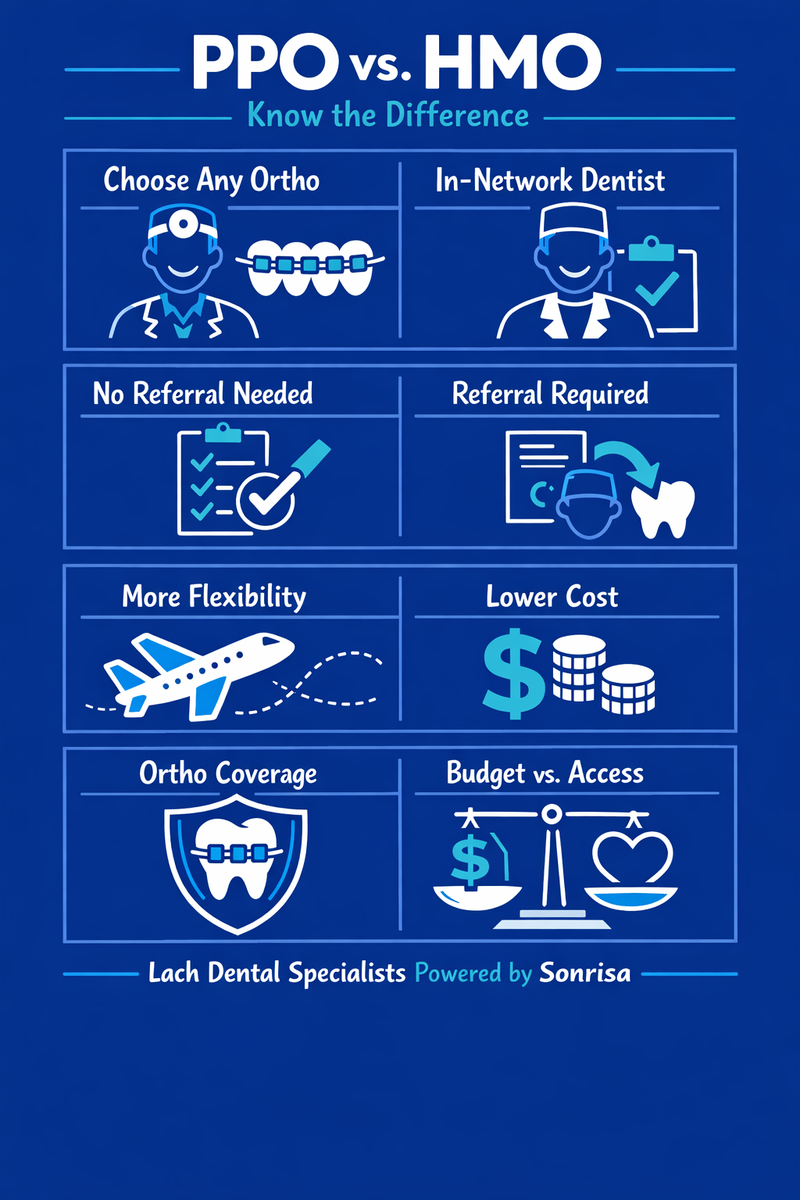 The Core Difference Between PPO and HMO Dental Plans
The biggest distinction between these two plan types comes down to flexibility and cost structure, and both matter a great deal when orthodontic treatment is involved.
A dental PPO, or Preferred Provider Organization, allows you to visit any licensed orthodontist, in-network or out-of-network. You’ll generally pay less when you stay in-network, but you’re not restricted to a specific list of providers. PPO plans tend to carry higher monthly premiums, but they offer broader access to specialists like orthodontists without requiring a referral from a primary dentist.
A dental HMO, or Health Maintenance Organization, requires you to select a primary care dentist from a designated network. Referrals are typically needed before you can see a specialist. The trade-off is a lower monthly premium and more predictable copay amounts. According to the American Dental Association’s Health Policy Institute, patients with private dental insurance are significantly more likely to receive dental care. 63% of insured children had at least one dental visit in 2022, compared to just 20% of uninsured children, reinforcing how much your plan type shapes the care you actually access.
How Each Plan Type Handles Orthodontic Benefits
Here is a breakdown of how each plan would handle your orthodontic benefits:
PPO Plans and Orthodontic Coverage
PPO plans are the more common choice among patients pursuing orthodontic treatment in Florida, and for good reason. Most PPO plans include a separate lifetime orthodontic maximum, often ranging from $1,000 to $2,500 — that covers a percentage of treatment costs, typically around 50%. This benefit usually applies to traditional metal braces and, depending on the plan, may extend to clear aligner treatment as well.
One important note: orthodontic benefits under PPO plans are usually a lifetime cap, not an annual one, meaning once the benefit is used, it does not renew. Age restrictions also vary widely. Many plans limit orthodontic coverage to dependent children under age 18 or 19, while others extend coverage to adults — something worth confirming directly with your insurer before starting treatment.
HMO Plans and Orthodontic Coverage
HMO dental plans handle orthodontics differently. Rather than reimbursing a percentage of treatment costs, HMO plans typically offer flat-fee schedules for covered procedures. This means you may pay a set copay for orthodontic treatment rather than a percentage of the total fee, which can feel more predictable, but may limit your choice of provider.
The key limitation with HMO plans is network access. You’ll need to confirm that a participating orthodontist is available in your area, and treatment options may be narrower depending on what providers are contracted with your plan. If you’re interested in Invisalign for kids or other newer treatment modalities, it’s worth asking upfront whether your HMO covers those options specifically.
Key Questions to Ask Before Orthodontic Treatment Starts
Before committing to a treatment plan, your insurance details matter as much as your clinical evaluation. There are several things every patient or parent should clarify with their insurer.
First, ask whether orthodontics is included in your plan at all. Not all dental plans cover it, and it’s a separate benefit even when it is included. Second, confirm whether coverage applies to children only or extends to adults, as this varies significantly by plan. Third, understand your lifetime maximum and how much of it, if any, has already been used.
It’s also worth confirming whether your plan has a waiting period before orthodontic benefits activate. Some dental plans require 6 to 12 months of enrollment before orthodontic coverage kicks in — a detail that can affect your treatment timeline. You can also verify your insurance directly through our office before your consultation, so there are no surprises.
What to Know About Financing When Coverage Falls Short
Even with solid dental insurance, orthodontic treatment often carries out-of-pocket costs. The gap between your plan’s lifetime maximum and the total treatment fee is something most families need to plan for. The good news is there are several flexible options available.
At Sonrisa Florida, we work with CareCredit, Proceed Finance, and Cherry to help patients manage treatment costs in a way that fits their budget. These financing partners offer payment plans that can make the remaining balance after insurance much more manageable. You can learn more about your financing options when you visit us for your consultation.
Start Your Orthodontic Journey at Sonrisa Florida
Whether you have a PPO, an HMO, or you’re still sorting out your coverage, the team at Sonrisa Florida is here to help you navigate the process from the first consultation forward. Dr. David Lach brings more than 30 years of orthodontic experience and has treated over 20,000 patients as an Elite Preferred Invisalign Provider. Both our Oviedo and Lake Nona locations serve adults and children, so your whole family can receive expert orthodontic care close to home.
We believe understanding your insurance shouldn’t stand in the way of getting the smile you want. Our team will walk you through your benefits, explain your out-of-pocket responsibilities, and help you explore financing through CareCredit, Proceed Finance, and Cherry if needed. Contact our office today to schedule your complimentary consultation and let us take the guesswork out of your coverage.