
Starting orthodontic treatment is exciting, but before brackets go on or aligners are ordered, there’s an important step many patients don’t realize they need to take: pre-authorization. Skipping it can result in a denied claim and unexpected out-of-pocket costs, even when orthodontic benefits are clearly listed in your plan.
At Sonrisa Florida, we work with patients at both our Oviedo and Lake Nona locations to navigate the insurance process before treatment ever begins. We serve adults and children alike, and whether your plan requires formal pre-authorization or a predetermination of benefits, understanding the process ahead of time helps protect your investment and your smile. You can also verify your insurance directly through our office before your consultation.
What Pre-Authorization Actually Means
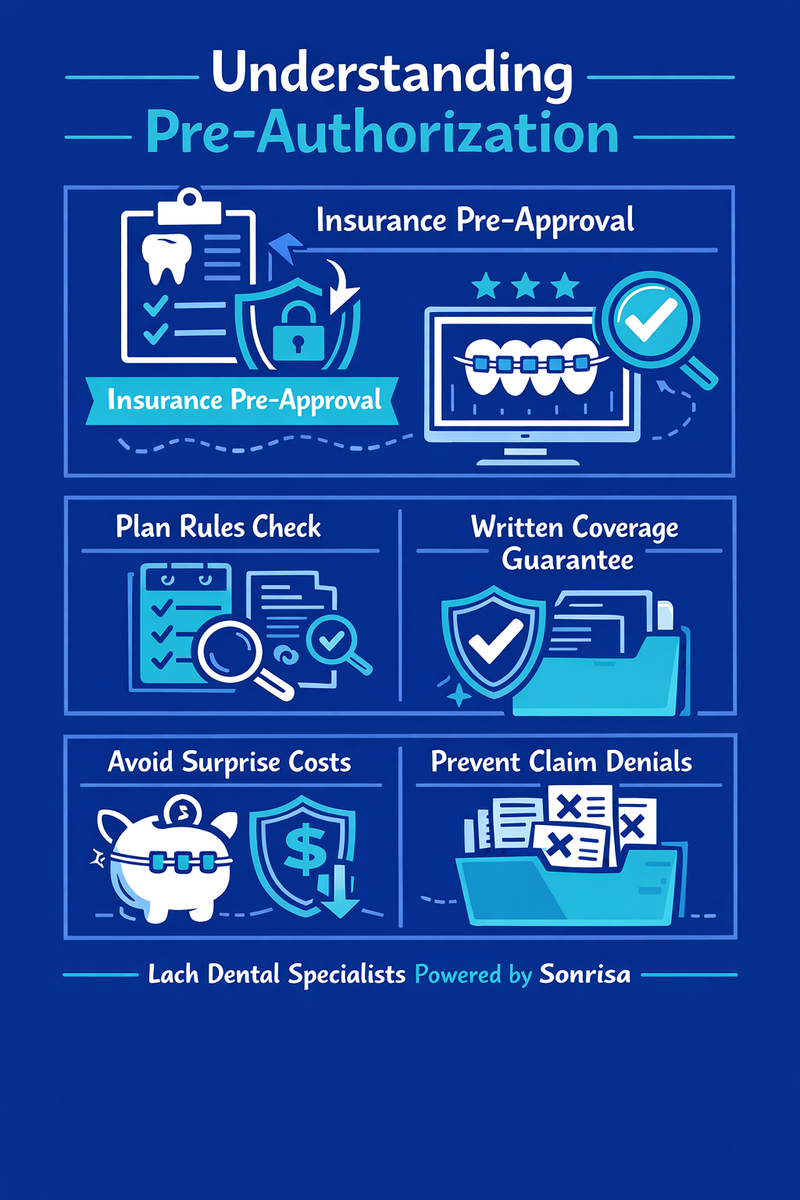
Pre-authorization, also called prior authorization or precertification, is a formal review your insurance company conducts before approving coverage for a proposed treatment. When a provider recommends orthodontic treatment, the insurer evaluates whether the procedure is covered under the specific plan, whether it meets the plan’s criteria, and whether any age or frequency limitations apply. It is not the same as a predetermination of benefits, which is simply an estimate of what the plan will pay. A successful pre-authorization is a written commitment from the insurer that the treatment will be covered at the stated benefit level, provided care is delivered as described.
Pre-authorization ensures that procedures are covered under the patient’s plan, reducing the risk of unexpected expenses for patients and minimizing claim denials. For orthodontic treatment in particular which involves a lifetime benefit, a multi-year treatment timeline, and often high cost, this step is worth every minute it takes.
What Information Your Insurer Will Need
Most insurance plans require pre-authorization for orthodontic services, and the submission typically involves a treatment plan, diagnostic records, and an estimated timeline. The specific documentation can vary by insurer, but the core elements are generally consistent.
Your orthodontist’s office will typically prepare and submit the following on your behalf:
- Patient demographics and insurance subscriber information
- A detailed orthodontic treatment plan including diagnosis, proposed appliances, and estimated treatment duration
- Diagnostic records such as X-rays, photographs, and dental models
- Current Dental Terminology (CDT) procedure codes relevant to your treatment
- A clinical narrative explaining the necessity of treatment
A strong narrative addresses the patient’s chief complaint, clinical findings such as malocclusion classification, and the impact of the condition on oral health function. Insurers want to see a clinical case, not just a cosmetic one — so documentation matters.
The Pre-Authorization Process Step by Step
Understanding how the process unfolds can reduce stress and help you plan accordingly. While each insurer handles submissions differently, the general workflow follows a predictable path.
Your orthodontic team will begin by collecting your insurance information and verifying the specific terms of your plan, including your lifetime orthodontic maximum, the percentage covered, and any applicable waiting periods. Once your records are complete, the pre-authorization request is submitted directly to your insurance company — often electronically through the insurer’s portal.
From there, the insurer reviews the submission and issues a decision. Turnaround times vary: some plans respond within a few business days, while others may take two to four weeks. Following up with the insurer to confirm receipt and address any additional requirements helps move the process along. Once approval is received in writing, your office will schedule the start of active treatment. It’s important to note that pre-authorization approvals are typically tied to a specific date window, so treatment should begin within that timeframe.
What Happens If a Pre-Authorization Is Denied
A denial does not have to be the end of the road. Studies suggest 82% of prior authorization denials are overturned on appeal, yet fewer than 11% of patients ever appeal. If your request is denied, your orthodontic office can help you understand the reason and determine whether an appeal is appropriate.
Common reasons for denial include incomplete clinical documentation, failure to demonstrate medical necessity, or missing evidence of failed conservative treatments. Strengthening the appeal with additional diagnostic support, a more detailed clinical narrative, or a letter of medical necessity from the treating provider can significantly improve the outcome. If the insurer upholds the denial, patients generally have the right to request an independent external review.
What to Ask Before Treatment Starts
Before submitting a pre-authorization request, it helps to have answers to a few key questions. First, confirm whether your plan requires pre-authorization or simply a predetermination — some PPO plans use the latter, and the process differs. Second, ask whether there is an active waiting period on your orthodontic benefit, as some plans require 6 to 12 months of enrollment before coverage activates. Third, find out whether your plan covers adults, children, or both, and whether braces and clear aligners are both included as covered treatment types.
Knowing these details before the submission goes in avoids delays and helps set realistic expectations for your financial responsibility throughout treatment.
Let Sonrisa Florida Handle the Insurance Work for You
Pre-authorization paperwork is one of the less glamorous parts of starting orthodontic treatment, but it’s one of the most important. At Sonrisa Florida, our team handles the insurance coordination so you can focus on the outcome. Dr. David Lach has more than 30 years of experience treating patients across Oviedo and Lake Nona, and as an Elite Preferred Invisalign Provider, he brings a depth of clinical documentation that supports a strong pre-authorization submission for both children and adults.
If your plan falls short of covering the full cost of treatment, we also offer flexible payment options through CareCredit, Proceed Finance, and Cherry to help bridge the gap. Learn more about your financing options or contact our office today to schedule your complimentary consultation and let us take it from there.