
Most people assume that oral surgery is automatically a dental insurance matter. In reality, the line between medical and dental coverage is far less clear, and for patients in the Orlando area, knowing which plan to use and how to coordinate both can mean the difference between significant savings and an unexpected bill.
At Sonrisa Florida, we treat adults and children at our Oviedo and Lake Nona locations, and insurance coordination is a conversation we have with patients every day. Whether you’re facing a wisdom tooth extraction, a jaw-related procedure, or something more complex, understanding how medical insurance interacts with oral surgery is worth knowing before you schedule. You can also verify your insurance through our office before your appointment.
 The Core Question: Medical or Dental Procedure?
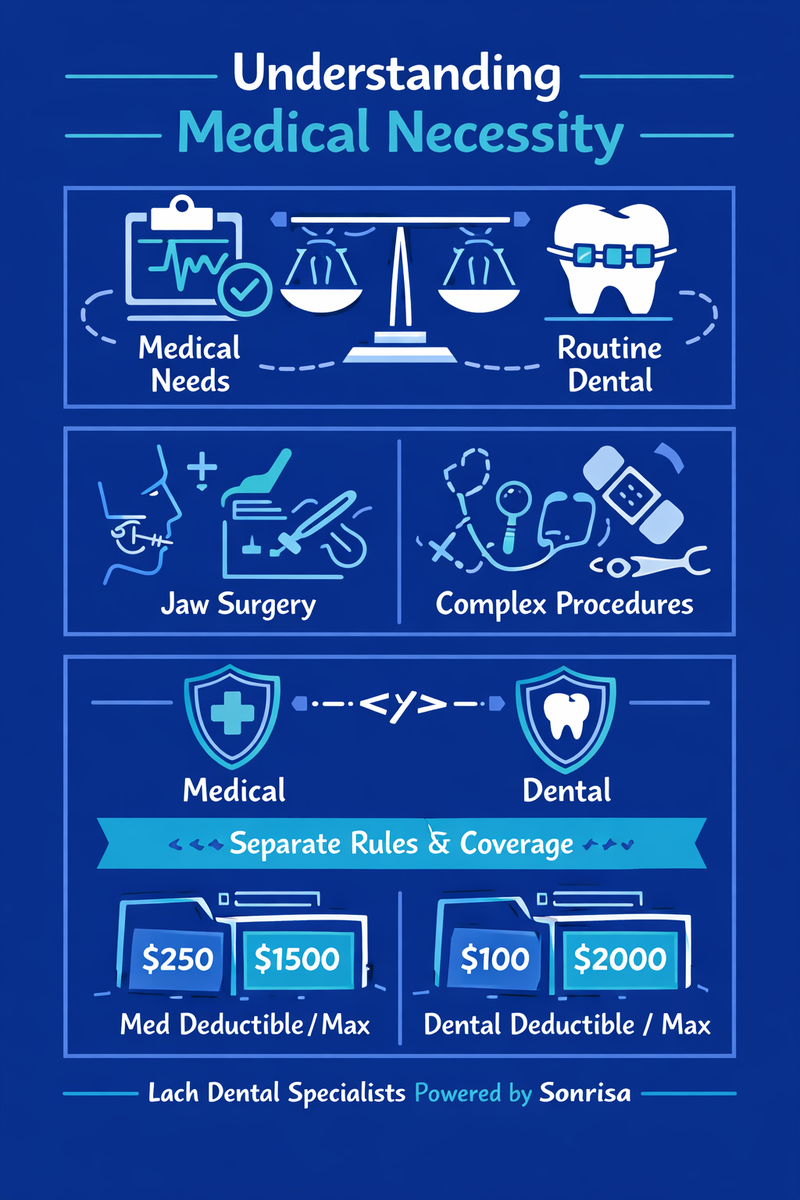 The Core Question: Medical or Dental Procedure?
The answer hinges on one key concept: medical necessity. Medical insurance plans will cover certain major oral surgery procedures, like jaw surgeries, depending on your plan, medical health status, type of surgery, and the complexity of the procedure. The challenge is that not every oral surgery automatically meets a medical plan’s definition of medically necessary, and that determination varies by insurer, procedure, and how the claim is coded.
If a procedure is considered medically necessary, meaning it is required for your body’s overall health and wellness, you may have the option to file a claim with your medical insurance. Routine dental procedures, by contrast, are almost always handled by dental insurance alone. The distinction matters because the two plan types have different deductibles, out-of-pocket maximums, and coverage percentages, and knowing which applies to your situation helps you plan accordingly.
Oral Surgery Procedures That May Qualify for Medical Coverage
Several categories of oral surgery are commonly recognized by medical insurers as potential medical claims. Understanding which procedures tend to qualify and under what circumstances helps patients ask better questions before treatment begins. Patients who have already explored surgical orthodontics or jaw-related care may find this especially relevant.
Procedures that may be billed to medical insurance include difficult wisdom tooth extractions and complex tooth removals, soft and hard tissue biopsies, correction of facial deformities, cancer-related treatment, dental and facial trauma from automobile or other accidents, non-routine diagnostic imaging, emergency treatment for oral infections and abscesses, general anesthesia for surgeries, and appliances for TMJ or sleep apnea.
For wisdom teeth specifically, complexity matters. Health insurance will likely cover the cost of impacted wisdom tooth removal when the procedure is medically necessary, such as when third molars are causing pain, infection, or cysts. Complete bony impaction is most likely to be covered by a medical plan, while soft-tissue impaction is less likely.
Jaw surgery is another area where medical coverage often applies. Medical plans may cover jaw surgery when non-surgical management, including appliance, physical, and behavioral therapies, cannot result in functional improvement. This is an important distinction: if a patient has already attempted conservative treatment without success, that history strengthens the case for medical coverage.
When Dental Insurance Handles It Instead
Not every oral surgery rises to the level of medical necessity under a health plan’s criteria. Wisdom teeth removal is generally covered by dental insurance as a standard dental procedure, with coverage typically including anesthesia and associated costs. For straightforward extractions, single-tooth removals, and most procedures that don’t involve a documented medical condition or complex surgical circumstance, dental insurance is the primary payer.
Some dental plans offer immediate coverage for basic oral surgery, while medical insurance has more limited and condition-specific coverage. Knowing the scope of your dental plan, what it covers, what your annual maximum is, and whether oral surgery requires a separate authorization is just as important as understanding your medical plan. Patients who are also exploring orthodontic care alongside oral surgery may want to review our insurance overview to understand how both benefits interact.
Coordinating Both Plans
One of the most overlooked opportunities for patients facing oral surgery is the potential to coordinate both medical and dental insurance to reduce out-of-pocket costs. Some medical insurance policies require that the dental insurance company be billed first, and once that claim is processed, a claim can be filed toward medical insurance. The oral surgeon’s office will need to provide supportive data and clinical notes to support why the procedure needs to be completed in a particular way.
This coordination process requires accurate documentation from the treating provider, including a clinical narrative, procedure codes, diagnostic records, and a written explanation of medical necessity. Our team handles this work on behalf of patients so that claims are submitted the first time and every available benefit is applied.
What Orlando-Area Patients Should Do Before Surgery
Before any oral surgery procedure, there are a few practical steps that protect you financially and help avoid surprises. Start by calling both your medical and dental insurers to ask specifically whether the proposed procedure is covered under either plan, what documentation they require, and whether pre-authorization is needed. Most major oral surgeries — particularly those with a medical necessity argument — require pre-authorization before treatment begins.
It also helps to ask your oral surgery team how they intend to code the procedure, since the specific codes used on the claim determine whether it routes through your dental or medical benefits. Providing your insurer with X-rays, diagnostic records, or a history of prior treatment attempts can strengthen a medical necessity argument significantly. Patients who have questions about their orthodontic extractions and how those may be billed should ask our team directly during their consultation.
Coverage Questions? Sonrisa Florida Is Here to Help
Navigating oral surgery insurance doesn’t have to be a solo effort. At Sonrisa Florida, Dr. Travis, a board-certified anesthesiologist with a master’s in anesthesiology, brings a high level of clinical precision to procedures involving sedation and complex oral surgery care. Our team serves patients across the Orlando area, helping families and adults alike understand their coverage and move forward with confidence.
If the cost of treatment extends beyond what your insurance covers, we also offer flexible payment options through CareCredit, Proceed Finance, and Cherry. Learn more about your financing options or contact our office today to schedule a consultation and let us help you understand your benefits before treatment begins.